.png)



.png)



February 17, 2026
The Hidden Cost of Manual Territory Adjustments in Field Sales

Head of Marketing

Territories rarely stay still.
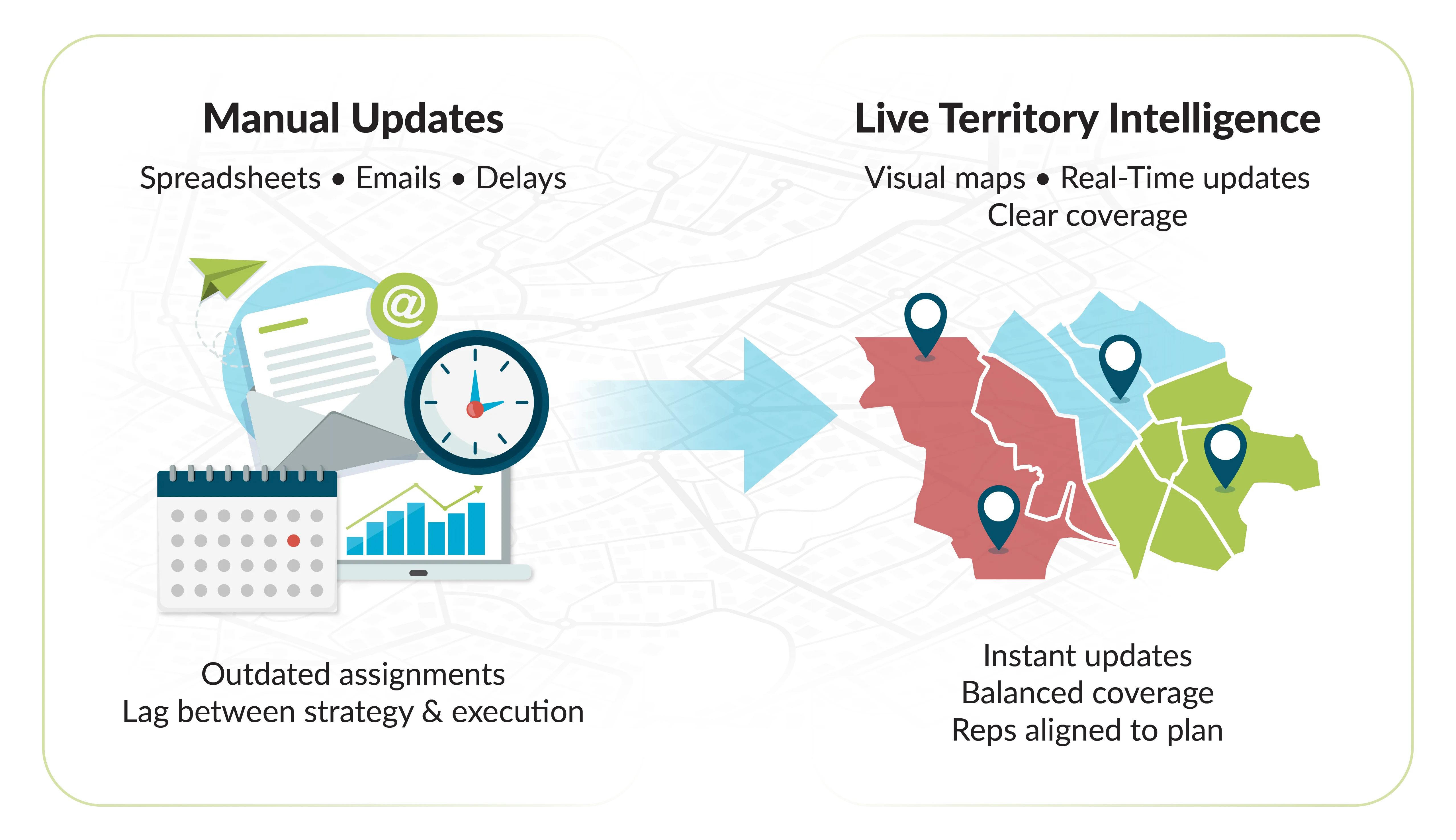
Accounts shift. Reps move. Coverage models change. New regions open. Old assumptions break. And yet, for many field sales organizations, territory updates are still handled the same way they were years ago: spreadsheets, emails, and manual handoffs.
On the surface, this feels manageable. Underneath, it creates compounding costs that quietly erode performance.
Spreadsheet Sprawl: When “Temporary” Becomes Permanent
Most territory adjustments don’t start as a big project. They start as a quick fix.
A rep leaves, so someone copies last quarter’s spreadsheet. A region needs coverage, so a manager tweaks a few rows. A new account segment emerges, so another version gets created.
Before long, you’re dealing with:
- Multiple spreadsheets with slightly different logic
- Conflicting versions sent over email or Slack
- No clear source of truth
- Manual reconciliation every time something changes
Each spreadsheet might feel harmless on its own. Together, they create sprawl—and with it, risk.
When territories live in spreadsheets, changes are fragile. One missed update can send reps in the wrong direction for weeks.
The Lag Between Strategy and Execution
Territory strategy is usually sound.
Leadership defines coverage goals. Operations models capacity. Managers align resources. But then reality intervenes.
The problem isn’t the strategy—it’s the lag.
When territory changes require manual updates:
- Decisions take days or weeks to roll out
- Reps operate on outdated assignments
- Managers hesitate to make changes because of the downstream work
- “We’ll fix it next quarter” becomes the default
That delay has real consequences. Opportunities slip through gaps. High-potential accounts go untouched. Reps optimize around old territories because that’s what they can see.
Strategy without speed doesn’t translate into execution.
Rep Frustration and Coverage Gaps
Field reps feel the impact first.
They’re the ones navigating:
- Confusing boundaries
- Overlapping territories
- Long drive times that don’t make sense
- Accounts that “belong to no one”
When territories aren’t clear or current, reps lose trust in the system. They spend time second-guessing assignments instead of selling. Morale dips. Productivity follows.
At the same time, coverage gaps emerge:
- High-value accounts sit idle
- Regions get overserved while others are ignored
- Managers lack visibility into what’s actually happening in the field
None of this shows up cleanly in a spreadsheet—but it shows up in results.
Why Visual, Real-Time Territory Management Changes the Equation
Modern field teams manage territories visually, not manually.
When territory logic lives on a map and updates in real time:
- Changes propagate instantly
- Reps always see the latest assignments
- Managers can spot gaps and overlaps immediately
- Coverage decisions are grounded in geography, not guesswork
Visual territory management closes the gap between planning and execution. It turns territory updates from a quarterly disruption into an ongoing, manageable process.
Most importantly, it restores confidence—for leaders, managers, and reps alike.
From Maintenance to Momentum
Manual territory adjustments don’t just cost time. They cost momentum.
Spreadsheets slow teams down. Lag creates friction. Frustration drives disengagement. And coverage gaps quietly drain revenue.
Field sales teams that modernize territory management don’t just clean things up—they unlock better execution, faster decisions, and stronger results.