.png)



.png)


February 19, 2026
Scorecards vs. Dashboards: What Sales Managers Actually Need

Head of Marketing
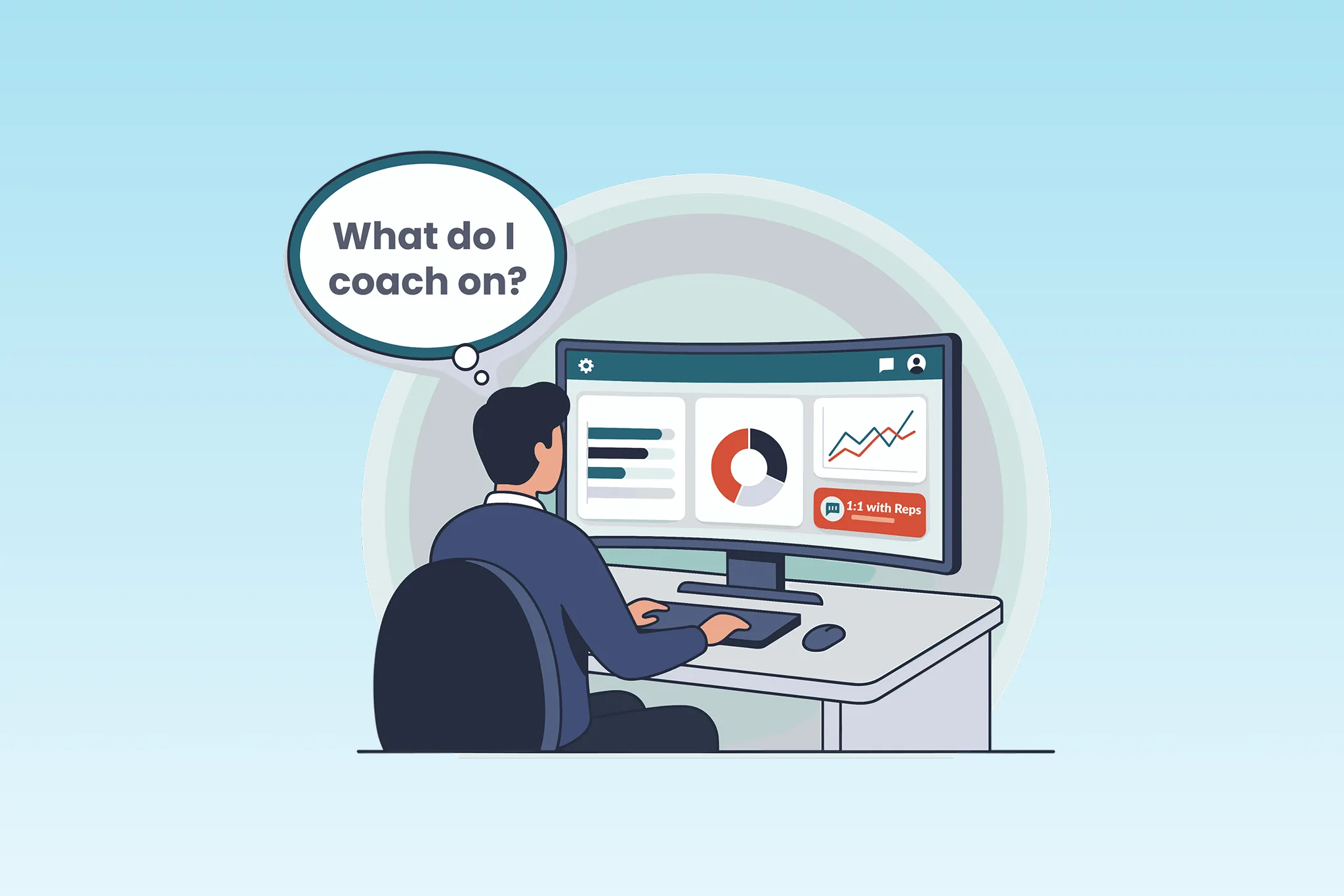
Sales teams have never had more dashboards.
Pipeline dashboards. Activity dashboards. Forecast dashboards. Performance dashboards.
And yet—coaching still feels reactive, inconsistent, and disconnected from day-to-day behavior.
That’s not a data problem.
It’s a management problem.
Because dashboards don’t change behavior. Scorecards do.
The Dashboard Illusion
Dashboards promise visibility. And to be fair, they deliver it.
They tell managers:
- What happened
- Where numbers landed
- Who’s ahead or behind
But dashboards stop short of what sales managers actually need.
They don’t tell you:
- Why performance changed
- What behavior caused the result
- What conversation to have next
Most dashboards are built for reporting, not coaching. They look impressive—but they rarely drive action.
Why Dashboards Rarely Lead to Better Coaching
Here’s what typically happens:
A manager opens a dashboard.
They see a number trending the wrong direction.
They schedule a meeting.
They ask a vague question like, “What’s going on here?”
At that point, coaching becomes:
- Subjective
- Inconsistent
- Dependent on gut feel or memory
The dashboard shows the outcome—but not the behaviors that created it.
And without behavioral clarity, coaching turns into guesswork.
Scorecards Change the Game
Scorecards flip the model.
Instead of starting with outcomes, they start with expectations.
A scorecard answers three questions clearly:
- What behaviors matter most?
- How are those behaviors performing right now?
- What should we coach on next?
Where dashboards summarize, scorecards focus.
They don’t try to show everything.
They show the few things that actually drive results.
The Difference in Practice
Here’s the real distinction sales managers feel day to day:
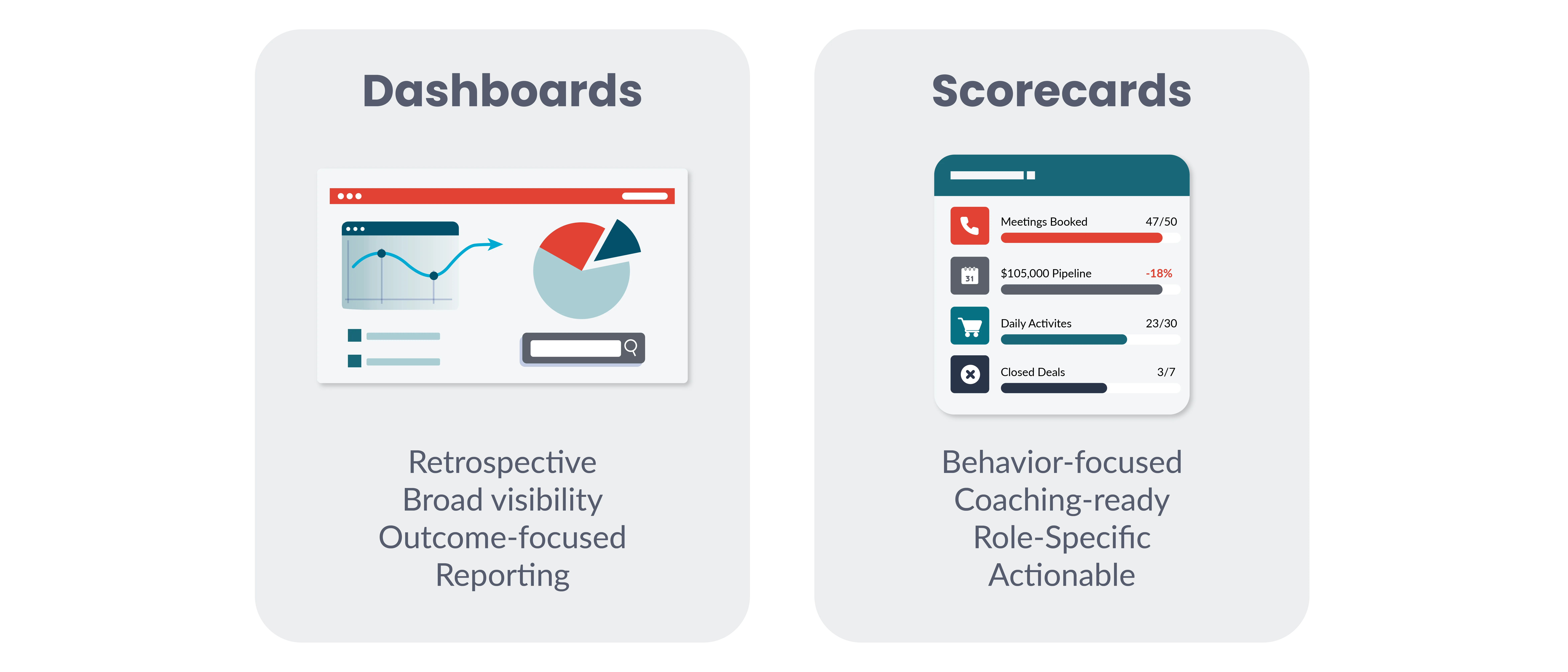
Dashboards
- Broad, retrospective
- Designed for executives and reporting
- Good for awareness
- Weak for coaching
Scorecards
- Specific and role-based
- Designed for managers and reps
- Good for behavior change
- Built for conversation
Dashboards answer: “What happened?”
Scorecards answer: “What should we work on next?”
Metrics Alone Don’t Coach People
This is where many teams get stuck.
They assume that if reps see the metrics, improvement will follow.
But metrics without context don’t coach anyone.
Scorecards create a bridge between:
- Data → Insight
- Insight → Conversation
- Conversation → Behavior change
Instead of reacting to misses after the fact, managers can coach:
- Leading indicators
- Skill gaps
- Consistency issues—before results suffer
Coaching Works Best When It’s Predictable
High-performing teams don’t coach randomly.
They use:
- The same scorecards
- The same metrics
- The same cadence
This creates a coaching rhythm:
- Weekly focus
- Clear expectations
- Fewer surprises
Scorecards make coaching repeatable—not dependent on individual manager style or memory.
Dashboards Still Matter—Just Not Alone
This isn’t an argument to eliminate dashboards.
Dashboards are still useful for:
- Executive visibility
- Trend analysis
- Forecast reviews
But dashboards shouldn’t be your coaching engine.
The teams that win use dashboards to monitor and scorecards to manage.
From Metrics to Action
Sales performance improves when:
- Metrics are tied to behaviors
- Behaviors are tied to conversations
- Conversations are tied to consistency
That’s the difference between knowing what happened—and knowing what to do next.
Turn Metrics Into Action
Dashboards show the scoreboard.
Scorecards change the game.